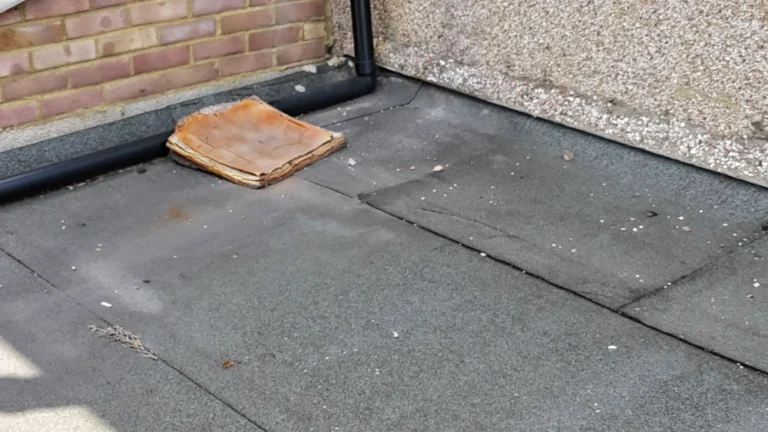
Wet Insulation: The Hidden Roof Problem That Costs More the Longer It’s Ignored
Wet insulation is one of the least visible, most consequential problems a flat roof can develop, precisely because it’s hidden beneath the membrane where you can’t see it directly. By the time it’s discovered, often during a repair for an unrelated issue, it’s frequently been quietly compromising the roof’s performance for a while.
Here’s why wet insulation matters more than it might seem, and how it typically gets found and addressed.
How Insulation Gets Wet in the First Place
Once water finds a way past the membrane, through a seam failure, a punctured area, or failed flashing, it doesn’t just drip straight through to the interior. It often spreads laterally through the insulation layer first, exactly the mechanism behind the water-travel pattern we cover in our water travel guide. This means insulation can be wet across a meaningfully larger area than the original entry point or the eventual interior stain would suggest.
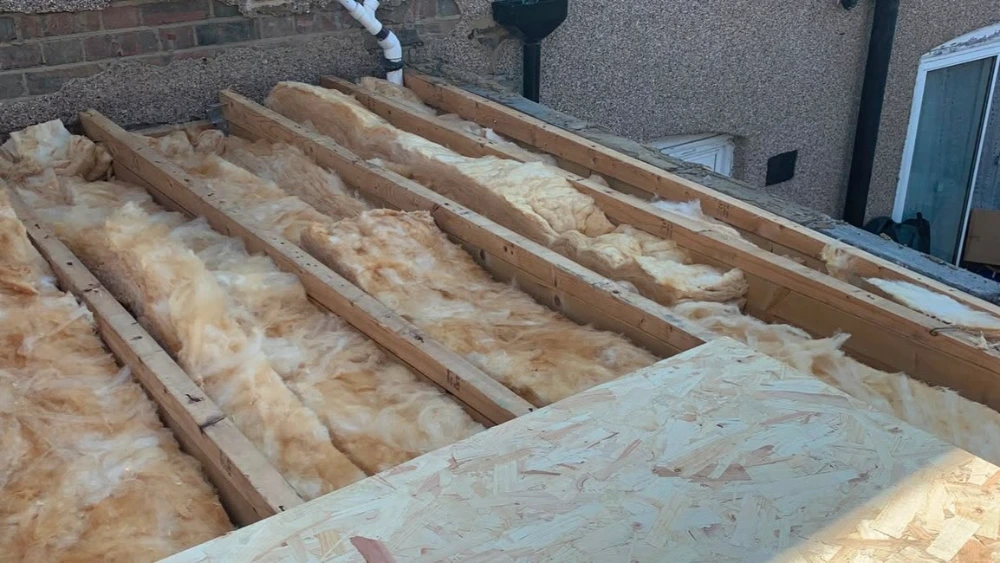
Why Wet Insulation Is a Real Problem, Not Just a Symptom
Wet insulation loses much of its thermal performance, meaning the roof’s energy efficiency drops in the affected area even if the membrane above it eventually gets repaired. Depending on the insulation type, prolonged moisture can also promote mold growth in an enclosed space, and it adds weight the structure wasn’t designed to carry long-term.
Critically, membrane repaired over still-wet insulation doesn’t actually solve the underlying problem, the trapped moisture continues to compromise the roof from below even after the surface leak stops.
How This Gets Properly Addressed
A thorough repair, once wet insulation is identified, involves removing the compromised material and replacing it with dry insulation before the membrane goes back down. This is a larger scope than a surface-only patch, which is exactly why we check for this specifically rather than assuming a membrane fix alone resolves a leak that’s been active for any meaningful length of time.
Moisture scanning, covered in our leak detection guide, is particularly useful for mapping the actual extent of wet insulation before any repair work starts, so the scope is based on real data rather than a guess.
Why This Matters for Older, Long-Undiagnosed Leaks
If a leak has been active for a while before finally getting professional attention, whether from delay, or from a previous surface-only repair that didn’t hold, wet insulation becomes a genuinely likely finding rather than an edge case. This is part of why we check for it directly rather than assuming a membrane-only fix will be sufficient once a leak has had time to spread.
If you’re dealing with a leak that’s been going on for a while, this is exactly the kind of hidden issue a thorough inspection is designed to catch before, not after, the repair is considered complete.
Frequently Asked Questions
How can you tell if insulation is wet without cutting into the roof?
Moisture scanning and infrared imaging can detect this non-invasively across a broad area, which is often more accurate than guessing based on the visible interior stain alone.
Does wet insulation always mean a bigger, more expensive repair?
It generally does add scope compared to a surface-only patch, since the compromised insulation needs replacement. The extent depends on how much area is actually affected.
Can wet insulation dry out on its own if I just fix the surface leak?
Not reliably, especially once the membrane is resealed over it, trapping the moisture. Proper replacement of the wet material is the reliable fix.
Should I be concerned about mold if my roof has had a leak for a while?
It’s worth having this assessed as part of a thorough inspection, particularly if the leak has been active for an extended period without professional attention.
Dealing With a Leak That’s Been Going On for a While?
We’ll check for wet insulation, not just patch the surface symptom.