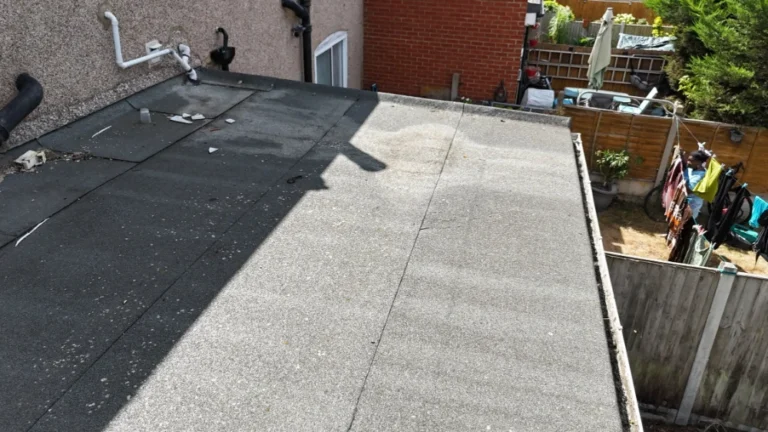
5 Warning Signs Your Flat Roof Needs Repair Before It’s Too Late
Most flat roof failures don’t happen overnight. They build slowly, often over several rainy seasons, dropping hints along the way that most homeowners simply don’t recognize as roof problems until water is actually dripping through the ceiling. If you catch these signs early, a flat roof repair in Downey is usually a same-day fix. Wait too long, and you’re often looking at replaced drywall, water-damaged insulation, and a much bigger bill.
Here are the five warning signs we see most often on flat and low-slope roofs across Downey and the surrounding Southeast LA County area, and what each one usually means.
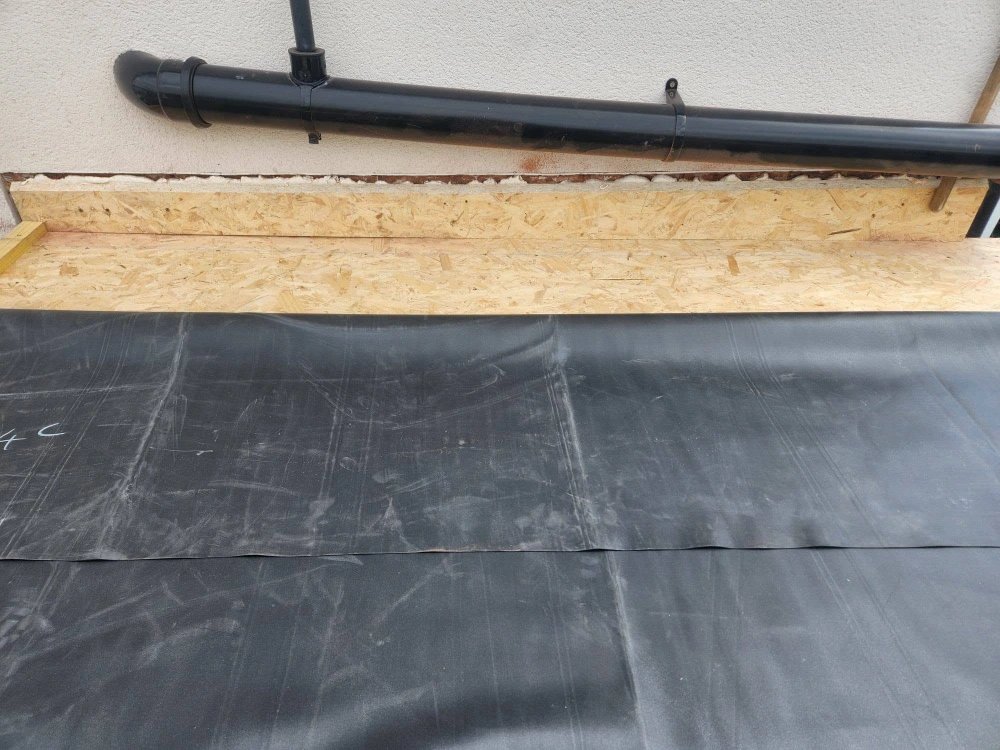
1. Water That Sits for More Than a Day or Two
A small amount of water sitting on a flat roof right after rain is normal. Water that’s still there 48 hours later, in the same spot every time it rains, is not. This is called ponding, and it’s one of the clearest early signals that something in your drainage system isn’t working the way it should.
Ponding water adds sustained weight to the roof structure, blocks reflective coatings from doing their job, and stresses the membrane at exactly the spot most likely to fail next. We cover the full mechanics of this in our guide to ponding water damage, but the short version is: if you can see standing water two days after the last rain, it’s worth having someone look at your drainage before it becomes a leak.

2. Cracked or Lifting Flashing Around Walls and Vents
Flashing is the material that seals the transition between your flat roof and anything vertical, a parapet wall, a vent pipe, a skylight curb. It’s also, by a wide margin, the most common place a flat roof actually leaks. If you can see daylight, gaps, or cracking where the roof meets a wall or penetration, that’s not cosmetic. That’s an active entry point for water.
Our leak causes guide breaks down exactly why transitions fail before the open membrane field does, but the pattern holds true across almost every roof we inspect: check the walls and penetrations first.

3. A Ceiling Stain That Keeps Growing
A stain that appeared once after a storm and hasn’t changed since is worth watching, but not necessarily urgent. A stain that grows a little wider after every rain means the leak is still active, and the water has likely been traveling farther than you’d expect before it drips through.
On a flat roof, water often travels sideways under the membrane before it finds a way in, which is why the stain in your ceiling and the actual failure point on the roof are frequently 15 to 20 feet apart. We explain this in detail in our guide on how water travels beneath a membrane, and it’s exactly why guessing at the source and patching the first thing you see so often fails to actually stop the leak.

4. Visible Cracking, Bubbling, or Granule Loss
Downey’s long, hot summers are hard on flat roof membranes. UV exposure dries out and stiffens the material over years, and by the time you can see cracking, bubbling (blistering), or bald patches where granules have worn away, the membrane’s protective layer is already compromised in that area.
This kind of wear often shows up seasonally, invisible all summer, then exposed as an active leak the first time real rain tests it. If your roof is showing any of these signs, it’s worth a proactive look before the rainy season, not after the first storm finds the weak spot for you.

5. A Soft, Spongy Feel Underfoot
This one isn’t something you’ll notice from the ground; it’s something a roofer notices while walking the roof during an inspection. A section that feels soft, spongy, or slightly springy underfoot usually means the roof deck beneath the membrane has already absorbed water and started to weaken.
This is one of the more serious signs on this list, since it points to damage that’s moved past the membrane and into the structural layer underneath. Left unaddressed, it can progress to a full deck repair rather than a contained membrane patch. If your roof was inspected years ago but not recently, this is exactly the kind of issue a fresh inspection is designed to catch early.
What to Do If You Recognize These Signs
None of these five signs mean you automatically need a full roof replacement. Most are addressable with a targeted repair if caught while they’re still isolated. What matters most is getting an accurate diagnosis before anyone starts patching, since a repair aimed at the wrong spot doesn’t actually solve the problem, it just delays the real fix and adds cost.
If you’re seeing any of these signs on your Downey property, a free flat roof inspection is the fastest way to find out exactly what’s going on and what it will take to fix it, with a written estimate before any work starts.
Frequently Asked Questions
How urgent is a small ceiling stain that hasn’t grown?
A stable, non-growing stain is worth monitoring and getting checked, but it’s usually not an emergency. If it starts growing after the next rain, that’s the signal to call promptly. See our guide on what counts as a minor roof leak for more detail.
Can I check for ponding water myself?
Yes, if you can safely view the roof from a window or ladder without walking on it. Note whether water is still visible two or more days after rain, and avoid walking on a wet or aging roof yourself.
How much does it cost to fix these early-stage issues?
It varies by cause and extent, but catching these signs early is almost always cheaper than waiting. See our full flat roof repair cost guide for real pricing factors.
Do these warning signs apply to commercial flat roofs too?
Yes, the same underlying mechanics apply regardless of building type. We inspect and repair both commercial and residential flat roofs throughout Downey.
Noticing Any of These Signs on Your Roof?
Get a free, no-obligation inspection before a small issue becomes an expensive one.