Solar Panels and Flat Roofs: What Homeowners Need to Know About Leak Risk
Solar panels and flat roofs are a common pairing in Downey, and for good reason: flat roofs offer excellent panel orientation flexibility and ample space. But the installation itself introduces a genuine leak risk that many homeowners don’t think about until years after the panels go up, when a leak develops and the roof and solar systems end up in a finger-pointing situation between installers.
Here’s what actually creates leak risk with a solar installation, and what to check if you’re planning one or already have panels on your flat roof.
Every Mounting Point Is a New Penetration
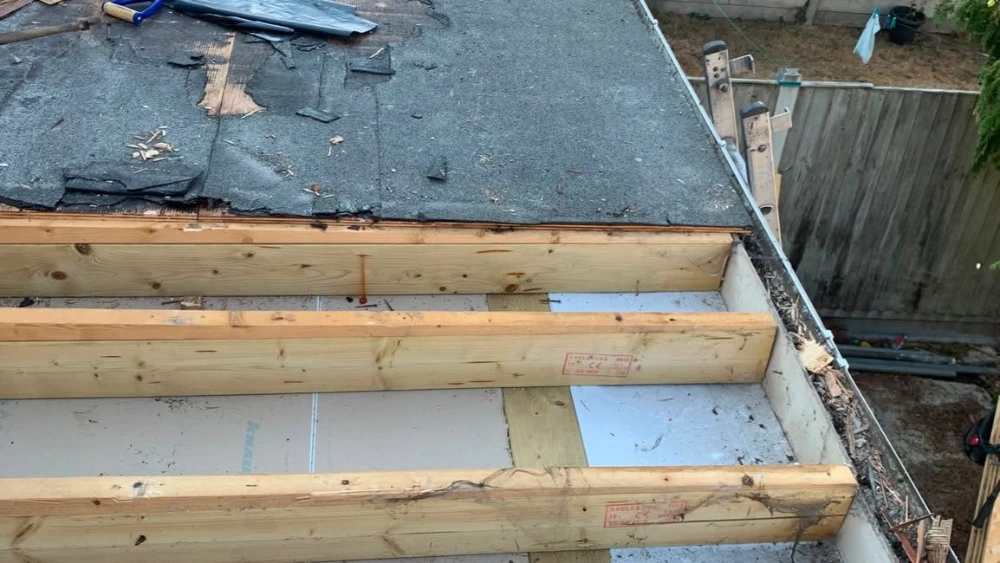
Each solar panel mounting point where hardware attaches to your roof structure is a new penetration through the membrane, and every one of these needs its own proper flashing and seal, the same standard as any other roof penetration. A larger panel array means more individual points that all need to be correctly sealed, not just the panels themselves installed correctly.
This is where installation quality varies significantly between solar companies. Solar installers are electrical and energy specialists first; roofing waterproofing expertise isn’t always their core competency, and it shows in how mounting points get flashed.
Why Leaks Sometimes Show Up Years After Installation
A mounting point sealed correctly at installation can still fail years later as sealant ages and the membrane around it experiences the same UV and thermal stress as the rest of the roof. This is why a solar-related leak often doesn’t show up in year one, it can take several years for that seal to actually degrade to the point of failure.
When it does happen, tracing it can be more complex than a standard roof leak, since diagnosis needs to account for the mounting hardware itself, not just the surrounding membrane.

What to Check Before and After Installation
Before installation, ask your solar company directly how mounting points will be flashed and sealed, and whether that work is warrantied separately from the panels’ electrical performance warranty. These are often different coverages entirely, a common source of confusion when something does go wrong.
After installation, or if you already have panels, a periodic check of the mounting points, part of a broader roof inspection, catches degrading seals before they become active leaks. See our solar panel penetration leak repair guide for the specific repair approach when a mounting point does fail.
If You’re Dealing With a Leak Near Your Solar Panels
We coordinate around existing solar installations rather than requiring panel removal for every repair, though some situations do require temporary panel relocation depending on where the failure is. We’ll assess the specific mounting points and surrounding membrane condition and give you a clear picture of what repair is actually needed.
If you’re planning a new solar installation, it’s also worth having your existing roof condition assessed first, adding new penetrations to a roof that’s already near the end of its service life is a combination worth avoiding if a replacement or major repair should happen first.
Frequently Asked Questions
Does adding solar panels void my existing roof warranty?
It depends on your specific roof warranty terms. Some exclude damage related to third-party modifications like solar mounting. Worth checking before installation, not after a leak develops.
Can you repair a roof leak without removing the solar panels?
Often yes, depending on where the failure point is relative to the panels. Some situations require temporary panel relocation, which we’ll discuss if it applies to your specific case.
Should I replace my roof before or after installing solar panels?
Generally before, if your roof is nearing the end of its service life. Installing new penetrations into an aging roof, then having to remove panels for a roof replacement shortly after, is a costly sequence worth avoiding with a pre-installation assessment.
Who’s responsible if a leak develops near my solar panels, the roofer or the solar company?
This depends on the specific cause and how the original installation warranties were structured. Clear documentation and warranty terms from both the original roofing and solar work make this much easier to resolve if it comes up.
Dealing With a Leak Near Your Solar Panels?
We assess mounting points and membrane condition together for a complete diagnosis.



One Comment