What’s Actually Under Your Flat Roof? A Layer-by-Layer Breakdown
Most homeowners think of their flat roof as a single surface, the membrane you can see. In reality, a properly built flat roof is a layered assembly, several distinct components working together, each with a specific job. Understanding these layers makes it much easier to understand what a contractor is actually talking about when they diagnose a problem or explain a repair.
Here’s a straightforward breakdown of what’s actually beneath the surface of your flat roof.
The Deck: The Structural Foundation
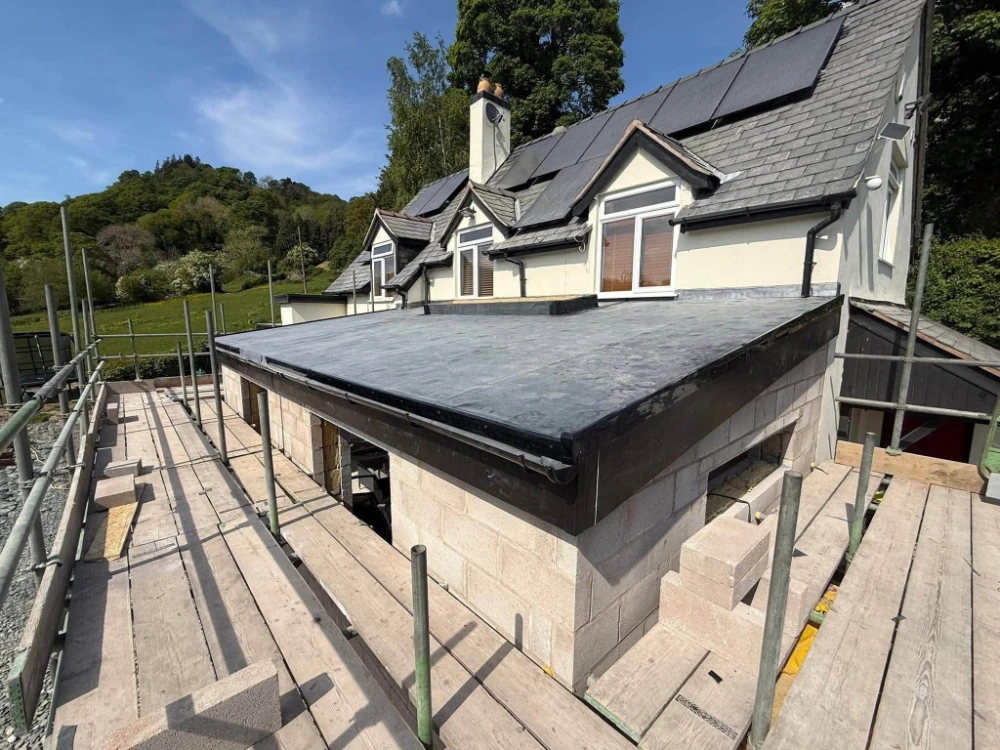
At the bottom of the assembly is the roof deck, typically wood (plywood or OSB) on residential construction, sometimes concrete or metal on commercial buildings. This is the structural layer everything else sits on, and it’s what we’re checking for when we talk about water damage reaching “the deck” in a repair conversation, since a softened or delaminated deck represents damage that’s moved past the membrane into the structure itself.
Insulation: More Than Just Temperature Control
Above the deck sits insulation, which manages thermal performance but also, in many modern flat roof designs, provides slope. Tapered insulation systems are shaped to direct water toward drains rather than relying solely on the deck’s own structural slope, which is why insulation choice and installation is a genuine part of drainage design, not just an energy efficiency decision.
The Membrane: What You Actually See
The membrane, TPO, EPDM, PVC, modified bitumen, or built-up roofing, is the visible, weatherproofing top layer most people think of as “the roof.” This is what takes direct UV exposure, foot traffic, and weather, and it’s the layer most repair work directly addresses. See our materials guide for the specific characteristics of each membrane type.
Flashing and Transitions: Where Layers Meet
Flashing isn’t really a separate layer so much as the critical detailing at every point where the membrane meets something vertical or penetrates through, parapet walls, pipes, equipment curbs, skylights. This is where the majority of leaks actually originate, not because these areas are inherently weaker, but because they require more precise installation than the open field of membrane.
Why This Matters When Talking to a Contractor
Understanding these layers helps you follow a diagnosis conversation more clearly, and ask better questions. If a contractor says water reached the deck, you’ll understand that’s more serious than a surface membrane issue. If they mention tapered insulation, you’ll understand that’s a drainage design conversation, not just a repair material choice.
We’re always glad to walk through exactly which layer is affected during any inspection or repair conversation, using plain language rather than assuming you already know the terminology.
Frequently Asked Questions
Do all flat roofs have all these layers?
The general structure (deck, insulation, membrane, flashing) is standard, though specific materials and design details vary by roof age, type, and original construction approach.
Which layer fails most often?
Flashing and transition points fail most frequently, more than the open membrane field or the deck itself, which is why we focus diagnostic attention there first.
Can I tell which layer is damaged just from an interior stain?
Not reliably on your own, since water travels laterally under the membrane before showing up inside. This is exactly why professional diagnosis matters rather than guessing from the visible symptom.
Does every repair involve multiple layers?
No, many repairs address only the membrane or flashing layer without touching insulation or the deck. Scope depends entirely on how far the specific problem has progressed.
Want to Understand What’s Happening With Your Specific Roof?
We’ll explain exactly what we find, layer by layer, in plain language.