
Why Ponding Water on Your Roof Is More Dangerous Than You Think
“It’s just a flat roof, some water sitting on it is normal.” We hear a version of this almost every week, usually from a homeowner who’s noticed standing water after rain but doesn’t think it’s worth a call. Sometimes that’s true. A small amount of water sitting for a few hours right after a storm isn’t cause for concern. But water that’s still there two or three days later, in the same spot every time it rains, is telling you something, and ignoring it tends to be more expensive than most people expect.
Here’s what ponding water actually does to a flat roof over time, and why it’s worth taking seriously well before it turns into an active leak.
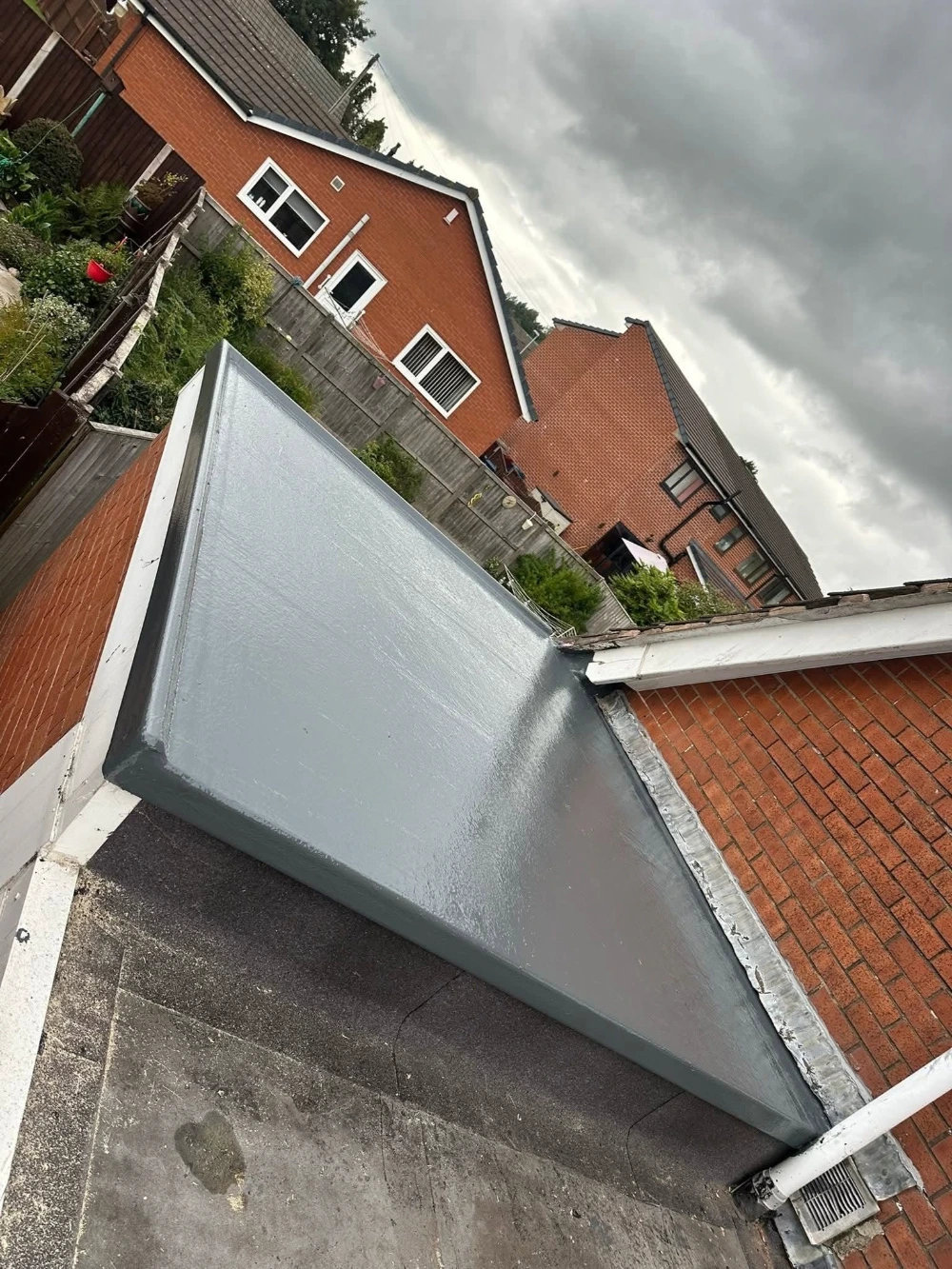
It’s Not Just Sitting There Harmlessly
Standing water adds real, sustained weight to your roof structure. Water weighs roughly 5.2 pounds per square foot per inch of depth, and that adds up fast across a ponded area of any real size. On an older roof, especially one with any existing structural sag, that added weight can accelerate settling, which deepens the low point, which holds more water. It’s a slow feedback loop that can take years to become obviously visible, but it moves in one direction if left alone.
Beyond the weight, ponding water blocks reflective coatings from doing their job, promotes algae and organic growth that degrades the membrane surface, and accelerates UV and moisture-related aging specifically at the ponded area. None of this is dramatic in the short term, which is exactly why it gets ignored.

Ponding Finds Weak Points Faster Than Dry Roofs Do
This is the mechanism that matters most. A small flaw in a membrane, a pinhole, a seam that’s just barely starting to separate, might never become an active leak on a roof where water drains away quickly. Under standing water, that same small flaw gets tested constantly, with sustained hydraulic pressure working at it every time it rains, for as long as the water sits there.
This is why a roof that’s had ponding water for years often develops a leak seemingly out of nowhere, when in reality the standing water had been quietly exploiting a weakness that a well-drained roof would have tolerated indefinitely. We explain the full mechanics in our guide on whether ponding water actually damages a flat roof.
The 48-Hour Standard, and Why It’s Not Arbitrary
Most roofing industry standards treat water that hasn’t drained within 48 hours after rain stops as a sign of a genuine drainage problem, not normal flat roof behavior. Some references use 24 hours. Either way, if you can consistently find standing water on your roof two or more days after the last rain, that’s the threshold worth acting on.
We cover this in more detail, including what to check first, in our guide on how long water can safely sit on a flat roof.

The Good News: Most Ponding Has a Simple Cause
Before assuming the worst, it’s worth knowing that a meaningful share of ponding water calls we get turn out to be a blocked drain, leaves, roofing granules, and windblown debris accumulating over time and restricting flow. This is a genuinely low-cost, often same-visit fix, and it’s something many homeowners can check and clear themselves on an accessible, single-story roof section.
If clearing visible debris doesn’t stop the pooling, that points to something more involved, either a damaged drain that needs repair, or a genuine slope issue that may need tapered insulation to correct. Our common drain problems guide walks through how to tell which category you’re dealing with.
When to Actually Call Someone
If you’ve noticed standing water that’s still visible two or more days after the last rain, and it’s happening consistently rather than after one unusually heavy storm, that’s worth a real assessment. We’ll check whether it’s a simple drain clearing, a hardware repair, or a genuine slope correction, and we’ll tell you honestly which category applies rather than defaulting to the most expensive option.
Catching a ponding water problem before it becomes a leak is one of the most cost-effective things you can do for a flat roof’s long-term health. Waiting until it’s already leaking means paying for both the drainage fix and the interior damage it caused along the way.
Frequently Asked Questions
Is some ponding water actually normal on any flat roof?
A small amount that fully drains within a day or two isn’t unusual. Water that consistently sits longer than that, in the same spot after every rain, is worth addressing even if it hasn’t caused visible damage yet.
Can I add more drains to fix a ponding problem myself?
Adding drainage capacity is possible but should follow a proper assessment. Adding drains without addressing an underlying slope issue sometimes just relocates where the ponding happens rather than solving it.
Does ponding water void a roof warranty?
It depends on your specific warranty and manufacturer, but some warranties do exclude damage related to prolonged ponding, treating it as a maintainable condition rather than a material defect. Worth checking your documentation.
How do I know if my ponding is from a bad drain or a structural slope issue?
Clear the nearest drain of debris first. If water still pools in the same spot with a clear drain, that points to slope rather than blockage. See our guide on why water pools on flat roofs for the full diagnostic breakdown.
Standing Water on Your Roof?
We’ll diagnose the actual cause, whether it’s a simple drain clearing or something more.



One Comment