How Much Does It Really Cost to Fix a Leaking Flat Roof in Los Angeles County?
“How much will this cost?” is usually the first question a homeowner asks once they’ve found a flat roof leak, and it’s also the hardest one to answer honestly without actually seeing the roof. Any contractor who gives you a firm number over the phone, before ever looking at the damage, is guessing, and that guess tends to be wrong in one direction or another once real work starts.
What we can do is walk through the real factors that drive flat roof repair cost across LA County, so you have context for evaluating any estimate you receive, whether it’s from us or someone else.
The Factors That Actually Determine Price
Four things drive the cost of almost every flat roof repair: the size of the affected area, the material involved, how much water damage exists beneath the surface (decking, insulation), and accessibility. A small, contained repair, a single seam, a pipe boot, a short section of flashing, is the least expensive category and is often completed in one visit.
Larger repairs involving multiple penetrations, a full parapet wall run, or drainage correction cost more due to added labor and material. And repairs that turn up water-damaged decking underneath the membrane cost more still, since that discovery adds scope beyond the original visible problem.
Small, Contained Repairs: The Most Common Category
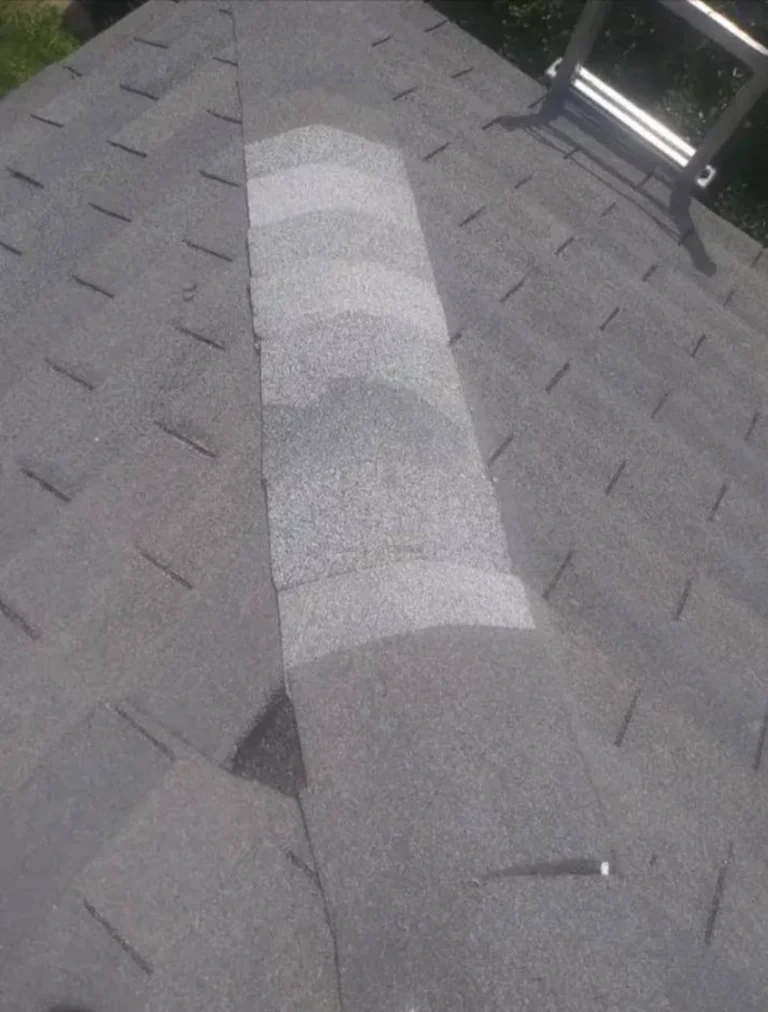
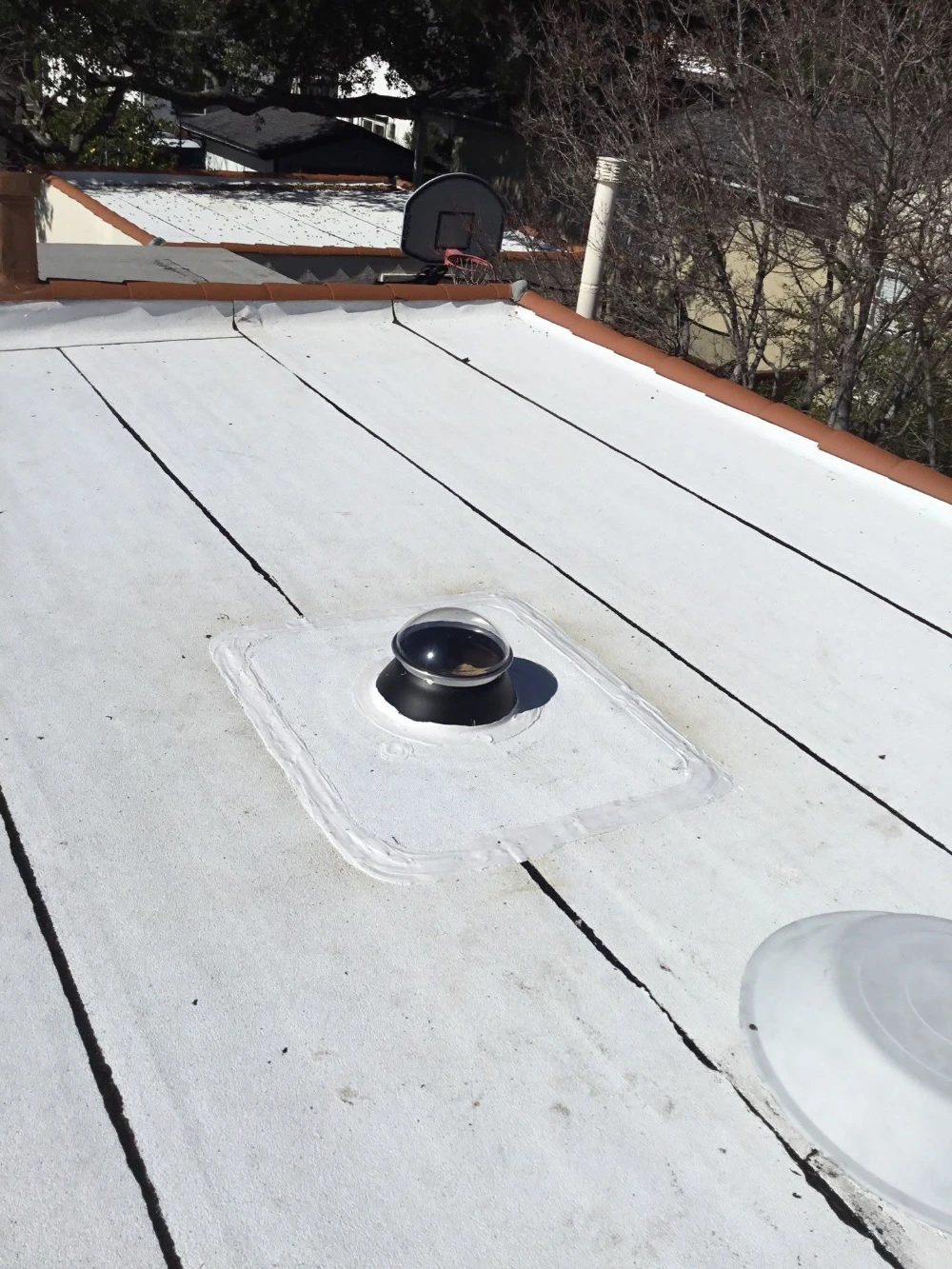
Most of the calls we get in Downey and across the surrounding cities fall into this category: a single failed seam, a cracked pipe boot, a short run of lifted flashing at a parapet wall. These jobs are typically completed same-day and represent the lower end of the cost range for any flat roof repair.
This is also the category where DIY temptation runs highest, and where a wrong guess costs the most relative to the size of the actual problem. Our guide on the cheapest way to fix a leaking roof covers this tradeoff directly.

Larger Repairs and Drainage Corrections
When a roof has multiple leak points, significant ponding water requiring drainage correction, or a membrane section that needs to be replaced rather than patched, cost increases with the added labor, material, and often specialty equipment involved. Correcting a genuine slope problem with tapered insulation, for example, is a meaningfully larger project than clearing a blocked drain.
We cover the specific drivers behind drainage-related costs in our ponding water guide, since standing water issues are one of the more common reasons a “simple” repair estimate grows once the roof is actually inspected.
When Repair Cost Approaches Replacement Cost
A useful industry rule of thumb: if the cost of a repair, or a series of repairs over a short period, approaches 30 to 50 percent of a full replacement cost, replacement is often the better long-term value. This is especially relevant for a roof that’s had multiple prior repair attempts or is nearing the end of its expected material lifespan.
We walk through this decision in detail in our repair vs. replacement cost guide, including how to tell which category your specific roof falls into rather than defaulting to whichever option a given contractor happens to prefer selling.
Does Insurance Cover Any of This?
Sometimes. Sudden, identifiable damage, storm damage, wind, a fallen branch, is typically covered. Gradual wear from age or lack of maintenance typically isn’t, the same principle as a car insurance policy not covering normal tire wear. There’s a genuine gray area when a storm exposes or worsens an already-existing weak point, and that’s where documentation matters most.
Our insurance coverage guide breaks down exactly what helps a claim succeed, and we document every inspection with photos regardless of whether you end up filing a claim.
Why We Don’t Publish a Flat Price List
You’ll notice we haven’t put actual dollar figures in this article, and that’s deliberate. Two roofs with what sounds like the same problem, “flashing is leaking”, can require completely different scopes of work depending on how much of the run is affected and what’s underneath it. A published price list either overpromises a number that won’t hold once we’re on your roof, or pads every quote high enough to cover worst-case scenarios that don’t apply to your specific situation.
What we do instead is provide a real, written, itemized quote after seeing the actual problem. If you want to get a feel for which cost category your situation likely falls into before that visit, our free cost calculator walks through a few quick questions and gives you a general read.
Frequently Asked Questions
Is a free inspection really free, with no obligation?
Yes. The inspection itself has no cost and no obligation to book any repair work afterward.
Why did one contractor’s quote come in so much lower than another’s for the same issue?
This usually means the scopes weren’t actually identical. A lower quote might address only the visible symptom, skip proper substrate prep, or use lower-grade materials. Ask for a detailed breakdown before assuming the lower number is the better deal.
Does the estimate include cleanup and disposal?
Yes, standard cleanup and disposal of removed material is part of our project scope and reflected in the written estimate, not billed as a surprise line item afterward.
Will the price change once work starts?
Only if we discover something beyond the original diagnosed scope, and if that happens, we stop and get your approval before doing or charging for any additional work.
Want a Real Number for Your Roof?
Free inspection, written estimate, no verbal ballparks.