
Roof Leak or Condensation? How to Tell the Difference
Not every damp spot on a ceiling is a roof leak. Condensation, moisture forming when warm, humid air meets a cold surface, can produce symptoms that look remarkably similar: a damp ceiling, a musty smell, even visible water stains. Treating condensation as a roof leak means paying for a roof repair that won’t fix anything, since the roof itself was never the problem.
Here’s how to tell the two apart, since getting this distinction right saves you from chasing the wrong fix entirely.
Timing Is the Biggest Clue
A genuine roof leak correlates with rain. It shows up during or shortly after a storm and tends to stay dry between rain events. Condensation follows a different pattern entirely, it’s often worse during specific temperature and humidity conditions regardless of whether it’s raining, and can actually be more noticeable during dry, cold mornings when indoor humidity meets a cold roof deck or ceiling surface.
If you’re seeing moisture appear on days with no rain at all, or notice it’s tied more to temperature swings than storms, condensation is worth considering before assuming a roof leak.
Location and Pattern Matter Too
Roof leaks tend to appear at specific, consistent points, often near a transition or penetration, even if that point isn’t directly above the interior stain due to lateral water travel. Condensation is often more diffuse, appearing across a broader ceiling area or concentrated in poorly ventilated spaces like bathrooms, kitchens, or laundry areas where humidity is naturally higher.
A single, consistent wet spot points toward a leak. Widespread dampness or moisture concentrated specifically in high-humidity rooms points more toward a ventilation or condensation issue.
Why Ventilation Is Often the Real Culprit
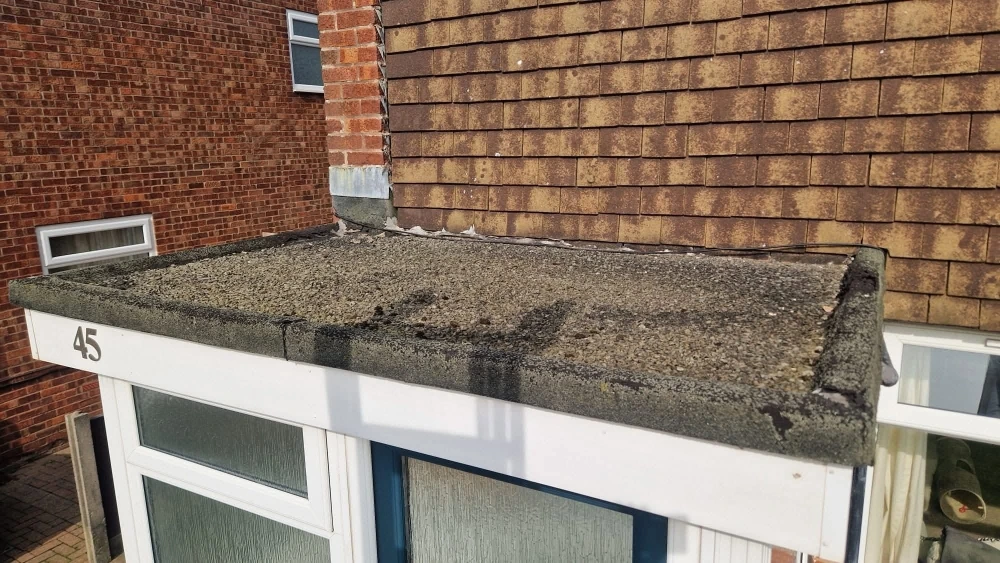
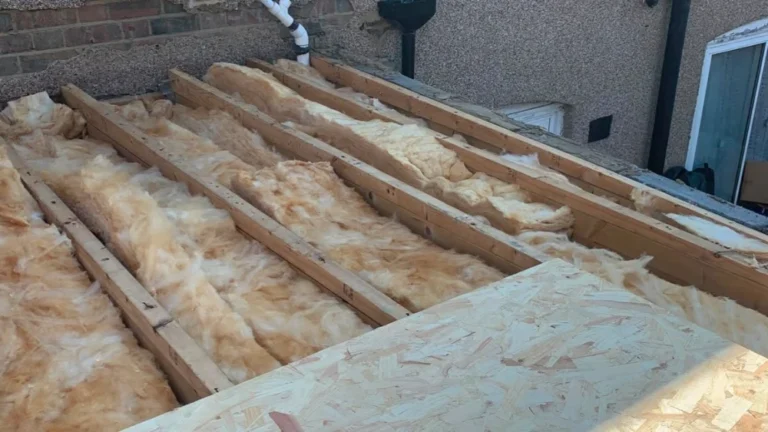
Flat roof assemblies, especially older or poorly ventilated ones, can trap warm, moist air from inside the building against the underside of a cold roof deck, exactly the condition that produces condensation. This is a genuinely common issue on older Downey properties where ventilation wasn’t designed to modern standards, or where insulation has been added or modified over the years without addressing airflow.
Unlike a roof leak, this isn’t fixed by repairing the membrane, it requires addressing ventilation or humidity sources inside the building instead.
When You’re Not Sure Which One You’re Dealing With
If you genuinely can’t tell whether you’re looking at a leak or condensation, that’s a completely reasonable position to be in, the symptoms really do overlap. A professional inspection can distinguish between the two using moisture patterns, timing correlation with weather, and a direct check of the roof assembly and ventilation.
Getting this diagnosis right matters, since a roof repair won’t solve a ventilation problem, and improving ventilation won’t fix an actual membrane leak. We’ll tell you honestly which one you’re dealing with before recommending any work.
Frequently Asked Questions
Can a roof have both a leak and a condensation issue at the same time?
Yes, this happens, and it’s part of why professional diagnosis matters. Addressing only one issue while the other continues means the problem doesn’t fully resolve.
Does condensation only happen on older roofs?
It’s more common on older or poorly ventilated assemblies, but any roof with inadequate ventilation relative to the building’s humidity levels can develop condensation issues regardless of age.
Is condensation dangerous the same way a leak is?
It carries similar risks, moisture damage, mold growth, if left unaddressed, even though the underlying cause and fix are completely different from a membrane leak.
How can I improve ventilation if that’s identified as the cause?
This depends on your specific roof assembly and building design. We can discuss options once a proper assessment identifies ventilation as the actual issue.
Not Sure If It’s a Leak or Condensation?
We’ll diagnose the actual cause before recommending any repair.



3 Comments