What Actually Happens During a Professional Flat Roof Inspection
A lot of homeowners picture a roof inspection as someone glancing at the roof from a ladder for a few minutes before handing over a quote. A real flat roof inspection is a much more deliberate process, and understanding what actually happens during one helps you evaluate whether you’re getting a genuine assessment or a rushed sales pitch.
Here’s what a thorough flat roof inspection actually involves, from the first conversation to the final written summary.
It Starts With Your Description, Not the Roof
Before anyone steps on the roof, a real inspection starts with a conversation: what have you noticed, where’s the stain or damp spot, when did it start, and what was the weather doing. This isn’t small talk. This context genuinely speeds up diagnosis, since it helps narrow down which area of the roof is worth checking first.
If you can measure the interior stain’s location relative to two fixed points, two walls, for example, that’s useful information to have ready before the inspection starts.

Checking the Whole Roof, Not Just the Reported Area
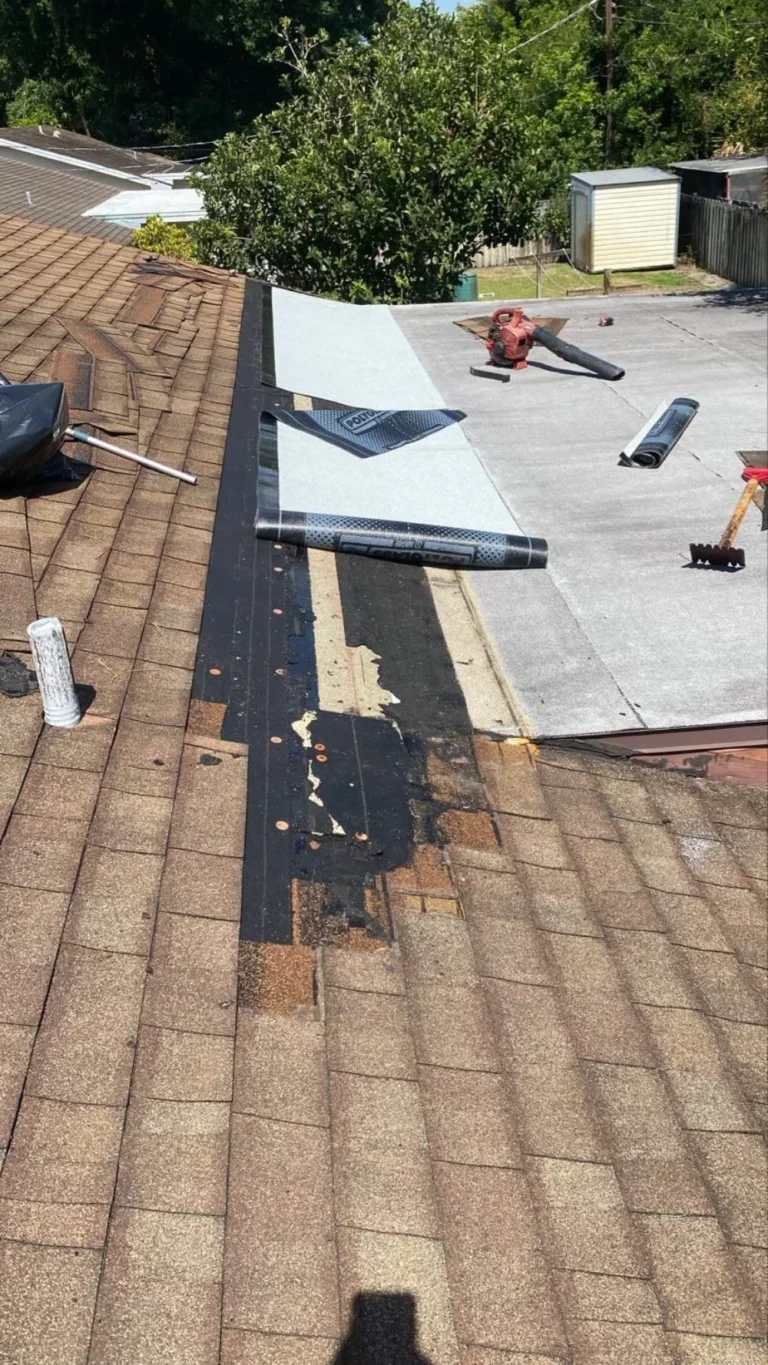
This is the part that separates a real inspection from a quick patch job. We walk the entire roof, not just the section near the reported leak, checking every parapet wall, flashing transition, penetration, seam, and drain. This matters because the visible symptom and the actual leak source are frequently not in the same place on a flat roof.
We’re also looking for issues you haven’t noticed yet, developing problems that haven’t caused an active leak but are worth flagging before they do. Finding and mentioning a secondary issue, even if we’re not repairing it during this visit, gives you the information to plan ahead rather than getting surprised by a second leak call later.

Using the Right Diagnostic Tool for the Situation
Not every leak needs every tool. A visually obvious flashing gap right above an active stain often doesn’t need anything beyond a careful visual inspection. A leak with no obvious surface cause, or one that’s clearly been active long enough for water to spread under the membrane, benefits from moisture scanning or infrared imaging to map the full extent before anyone cuts into anything.
We cover the specific methods and when each one applies in our leak detection guide, including moisture scanning, infrared inspection, and controlled water testing for genuinely difficult cases.
What You Get at the End
A real inspection ends with a clear written summary: what we found, with photos, and what (if anything) needs attention. If there’s no active problem worth addressing, we’ll tell you that too rather than manufacturing urgency to sell a repair you don’t need. If a repair is warranted, you’ll get an itemized, written estimate, not a verbal number that changes once work starts.
This documentation is also genuinely useful beyond the immediate decision, for insurance purposes, for a home sale, or just as a baseline record of your roof’s condition at a specific point in time. See our guide on what a legitimate roofing estimate should include for what to expect and what to question if it’s missing.
When to Schedule One
The three most common reasons homeowners request an inspection: an active leak that needs diagnosis, a pre-purchase or pre-sale assessment of a property’s roof condition, and proactive maintenance ahead of the rainy season. That last one is genuinely underused. Late summer, before the first real rain tests everything the summer heat quietly weakened, is the best-timed inspection you can schedule if your roof hasn’t been checked recently.
Whatever your reason, a free flat roof inspection in Downey comes with no obligation to book any repair work afterward.
Frequently Asked Questions
How long does a typical inspection take?
A straightforward case with an obvious cause can be assessed in under an hour. More complex situations involving scanning or a larger roof can take longer, and we’ll give you a time estimate once we understand the situation.
Do I need to be present during the inspection?
It helps if you can describe what you’ve noticed beforehand, but it’s not strictly required if you’re not available. We’ll walk you through findings afterward either way.
Will you try to sell me something I don’t need?
No. If there’s no active problem worth addressing, we’ll tell you that directly. Our business depends on repeat trust from Downey homeowners, not on manufacturing repairs.
Can an inspection catch problems before they become leaks?
Yes, that’s a large part of the value. We flag developing issues, worn flashing, early membrane wear, minor ponding, even when they haven’t caused an active leak yet, so you can address them proactively.
Ready to Schedule a Real Inspection?
Free, thorough, and no pressure to book work you don’t need.